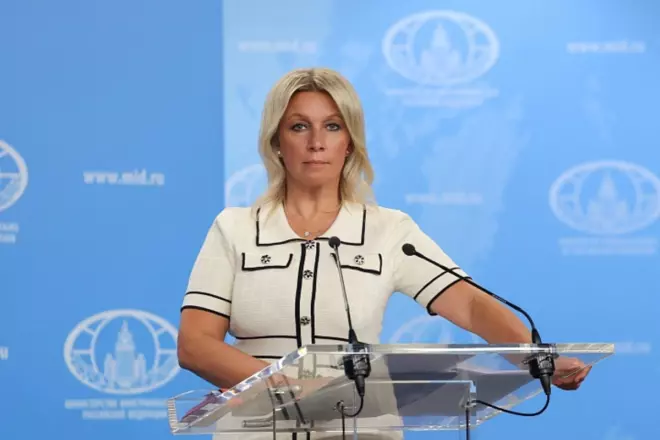
Russian Foreign Ministry spokesperson Maria Zakharova’s statement on the case of Uzbek blogger Aziz Hakimov showed that the verdict handed down in Tashkent remains a matter of attention for Moscow even after the completion of the trial at the court of first instance. While in July Russian diplomacy limited itself to calls for a “fair and humane decision,” the Russian side has now effectively questioned the logic of the judicial proceedings, defending the convicted blogger while simultaneously launching a sharp attack on one of the victims in the case. This turns the story of Comrade Aziz from an internal criminal case in Uzbekistan into part of a broader political dispute over Russian influence in Central Asia, freedom of expression, the sovereignty of regional states, and the consequences of Russia’s war against Ukraine.
On August 20, Russian Foreign Ministry spokesperson Maria Zakharova said that Moscow had taken note of the guilty verdict handed down against Aziz Hakimov. According to her, the convicted blogger had “consistently advocated strengthening Russian-Uzbek relations and preserving a shared historical memory.”
At the same time, Zakharova sharply criticized one of the victims in the case — blogger Nikita Makarenko (his surname appeared in the question, not in Zakharova’s answer), accusing him of allegedly spreading “Russophobic fakes” and inciting interethnic hatred. The Russian foreign policy official also said that the purpose of such actions was to damage the Russian-Uzbek strategic partnership.
Particularly notable was the closing part of the statement, in which Zakharova expressed hope that the Uzbek authorities would provide a legal assessment of the activities of one of the victims in the case, blogger Nikita Makarenko.
“We expect the authorities of our friendly country to finally provide an objective legal assessment of the activities of this pseudo-patriot,” Zakharova said, referring to Makarenko.
This is not the first time Russian diplomacy has intervened publicly in the discussion surrounding the Hakimov case.
Even before the trial on the merits began, Zakharova called Hakimov a “long-standing and reliable friend” of Russia and said that Moscow was closely following developments. At the time, the Russian side simultaneously stressed that it did not intend to interfere in Uzbekistan’s internal affairs while demonstrating clear interest in the fate of the accused.
Now, following the verdict, the tone of the statements has become noticeably sharper.
A verdict that was less severe than initially expected
On August 11, the Shaykhantahur District Criminal Court in Tashkent found Aziz Hakimov guilty under three articles of the Criminal Code: incitement of national, racial, ethnic or religious hatred, defamation, and insult.
At the same time, the court acquitted him of the charge of propaganda of war.
The war-propaganda charge had been considered one of the most serious charges in the case from the outset and could have resulted in a substantially harsher sentence.
The court ultimately sentenced Hakimov to four years and two months in prison.
Taking into account the time he has spent in detention since September 2025, he effectively has about three years and three months left to serve.
Another notable feature of the sentence was the decision to send Hakimov not to a conventional correctional colony but to a colony-settlement, the least restrictive type of custodial institution provided for under Uzbekistan’s penal system.
According to his lawyer, Sergey Mayorov, once the verdict becomes legally binding, Hakimov will be allowed to use a basic mobile phone, maintain contact with a limited list of people, and receive regular visits from relatives.
The blogger does not intend to appeal the verdict, according to his lawyer.
The reason is pragmatic: the sooner the verdict takes effect, the sooner he can leave the pre-trial detention facility and move to significantly less restrictive conditions.
The lawyer also said that Hakimov could become eligible for parole within several months.
A closed trial and unanswered questions
Despite the public interest surrounding the case, much of the substance of the proceedings remains unknown.
All hearings were held behind closed doors.
Journalists were not allowed into the courtroom, and participants in the proceedings signed confidentiality undertakings.
According to Mayorov, the decision to hold the hearings in private was related to the presence of prominent public figures among the victims and the discussion of details of their private lives.
The court has not independently confirmed this explanation.
As a result, the public has not been able to examine the prosecution’s evidence, the defense arguments, witness testimony, or the reasoning behind the court’s decision to convict Hakimov on some charges while acquitting him on another.
That secrecy has contributed significantly to the politicization of the case.
When the substance of a trial remains inaccessible, the vacuum is quickly filled by political interpretations.
From a criminal case to geopolitics
This has been particularly visible in Russia.
Even before the verdict, the Hakimov case became the subject of a roundtable discussion in Moscow organized by the Russian outlet Ridus.
The discussion focused less on the specific charges against the blogger and more on the position of pro-Russian activists in Central Asia, the region’s relations with Moscow, and an alleged confrontation between pro-Russian and pro-Ukrainian forces.
During the discussion, Hakimov’s lawyer Sergey Mayorov portrayed the dispute as a confrontation between Hakimov and blogger Nikita Makarenko, who hold opposing views on Russia’s war against Ukraine.
The discussion subsequently took on an even broader political dimension.
Some participants claimed that the prosecution of Hakimov was allegedly connected to the activities of “pro-Ukrainian forces” in Uzbekistan.
Others warned of the risk of a “new anti-Russia” emerging in Central Asia.
The most controversial statements came from several Russian participants who effectively questioned the historical foundations of the sovereignty of the states in the region.
Thus, the criminal case against one blogger gradually became a symbolic dispute over the geopolitical orientation of Central Asia.
Who is Comrade Aziz?
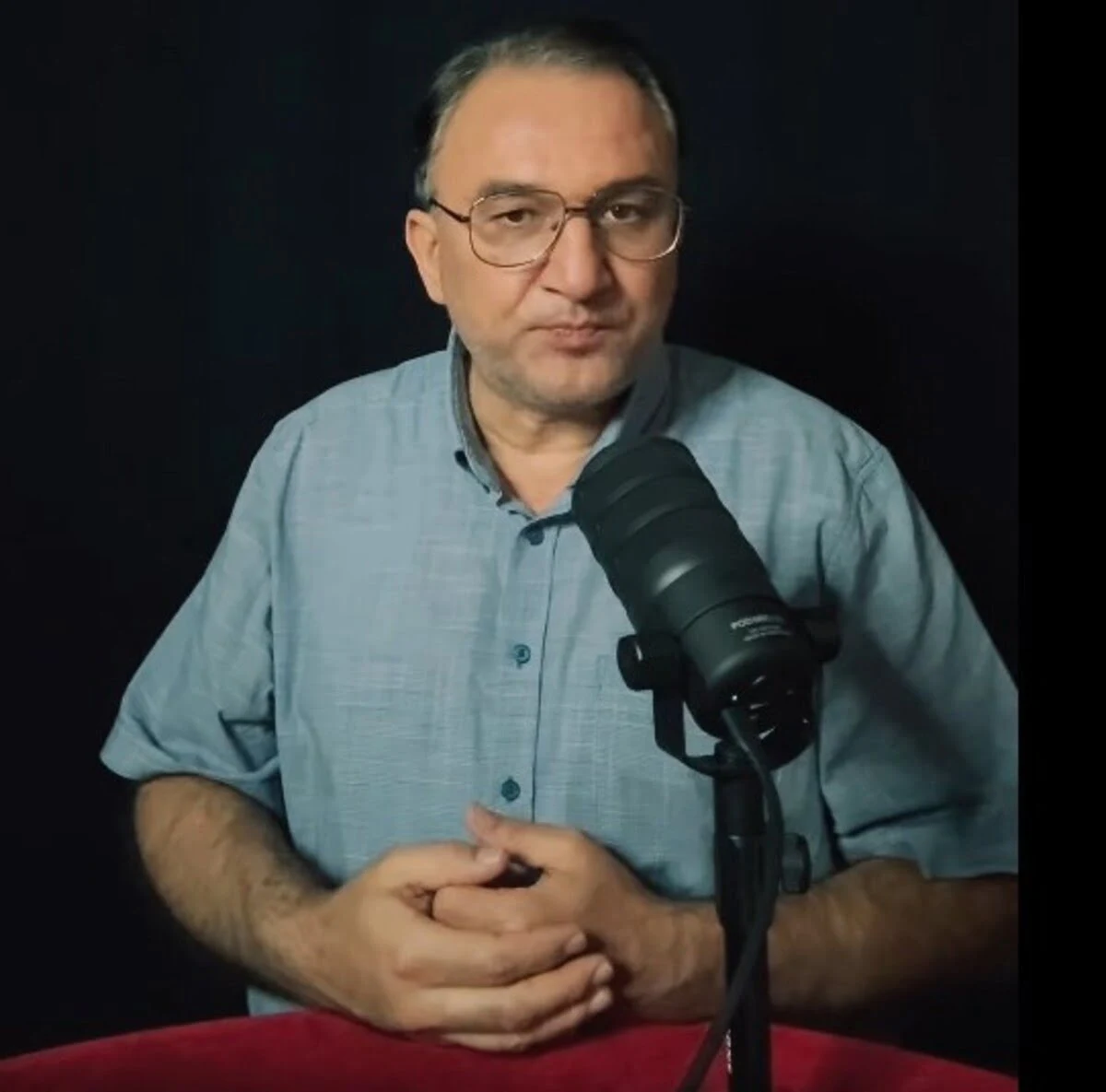
Aziz Hakimov became known through his Comrade Aziz Telegram channel and social media posts.
For several years, he actively supported Russia’s position on the war against Ukraine, distributed material from Russian military correspondents, and criticized opponents who held different views.
He also repeatedly clashed publicly with Uzbek journalists, bloggers, human rights activists and public figures.
The victims in the case included blogger Nikita Makarenko, former MP Rasul Kusherbayev, University of Journalism rector Sherzodkhon Kudratkhoja, Nozima Muratova, Shakhnoza Ergashova and Madina Amreyeva.
When Hakimov was arrested in autumn 2025, investigators charged him under four articles: propaganda of war, incitement of hatred, defamation and insult.
For almost a year, the case was accompanied by numerous procedural disputes.
In spring 2026, the court returned the case materials to prosecutors following defense complaints about alleged procedural violations in the preparation of the criminal case.
The proceedings were later resumed.
What Zakharova’s statement means
The Russian Foreign Ministry’s comment does not, in itself, alter Hakimov’s legal position.
The verdict was handed down by an Uzbek court and will be enforced under Uzbek law.
Its political significance, however, is difficult to ignore.
The Russian Foreign Ministry continues to publicly defend the convicted blogger while demonstrating that it views Hakimov not simply as a defendant in a criminal case, but also as one of the proponents of a pro-Russian narrative in the region.
Another point is equally important.
In its latest statement, Russian diplomacy has shifted its focus more openly from defending Hakimov himself to criticizing one of his opponents.
This suggests that, for Moscow, the case has long since moved beyond the criminal proceedings and is being treated as part of a broader ideological conflict.
For Uzbekistan, however, the case remains primarily a domestic judicial matter. The court found Hakimov guilty on three charges and acquitted him on one.
But even after the trial has ended, judging by Moscow’s reaction, the story is unlikely to disappear from the public sphere. Instead, the Hakimov case continues to take on a political life of its own — far beyond the walls of the Tashkent courtroom.
Also read:
- Aziz Hakimov sentenced to 4 years and 2 months in prison by Tashkent district court
- The Aziz Hakimov case: from a Tashkent courtroom to debates about Central Asia in Moscow
- Trial on the merits begins in Tashkent against pro-Russian blogger Aziz Hakimov
- Trial in the case of “Comrade Aziz”: case returned to prosecutor amid pressure on the press
- The trial of blogger Aziz Hakimov begins in Tashkent; defense alleges document forgery
- In Uzbekistan, blogger Aziz Hakimov known for promoting Russian propaganda narrative arrested