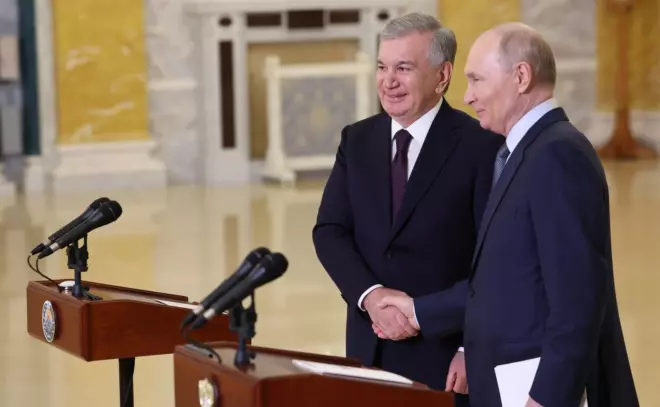
Uzbek President Shavkat Mirziyoyev arrived in St. Petersburg on June 4 to participate in the St. Petersburg International Economic Forum (SPIEF) and hold talks with Russian President Vladimir Putin. His visit comes at a time when the forum no longer attracts the number of world leaders it did before Russia’s full-scale invasion of Ukraine, while the opening day of SPIEF was accompanied by reports of Ukrainian drone attacks on targets in and around St. Petersburg.
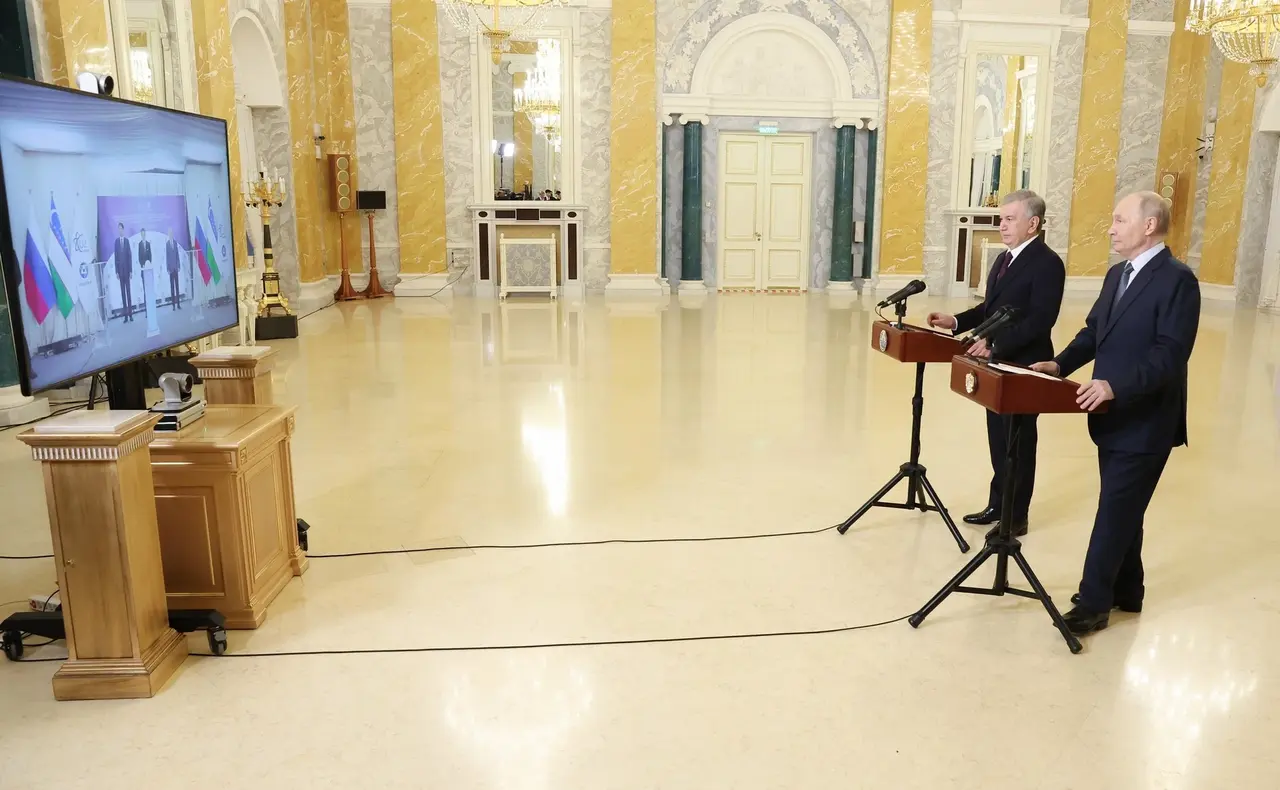
The key events of the visit were the bilateral meeting between the two presidents and the joint launch of construction of the first power unit of an integrated nuclear power plant in Uzbekistan.
The Russian and Uzbek presidential press services described the talks in similar terms but emphasized different aspects.
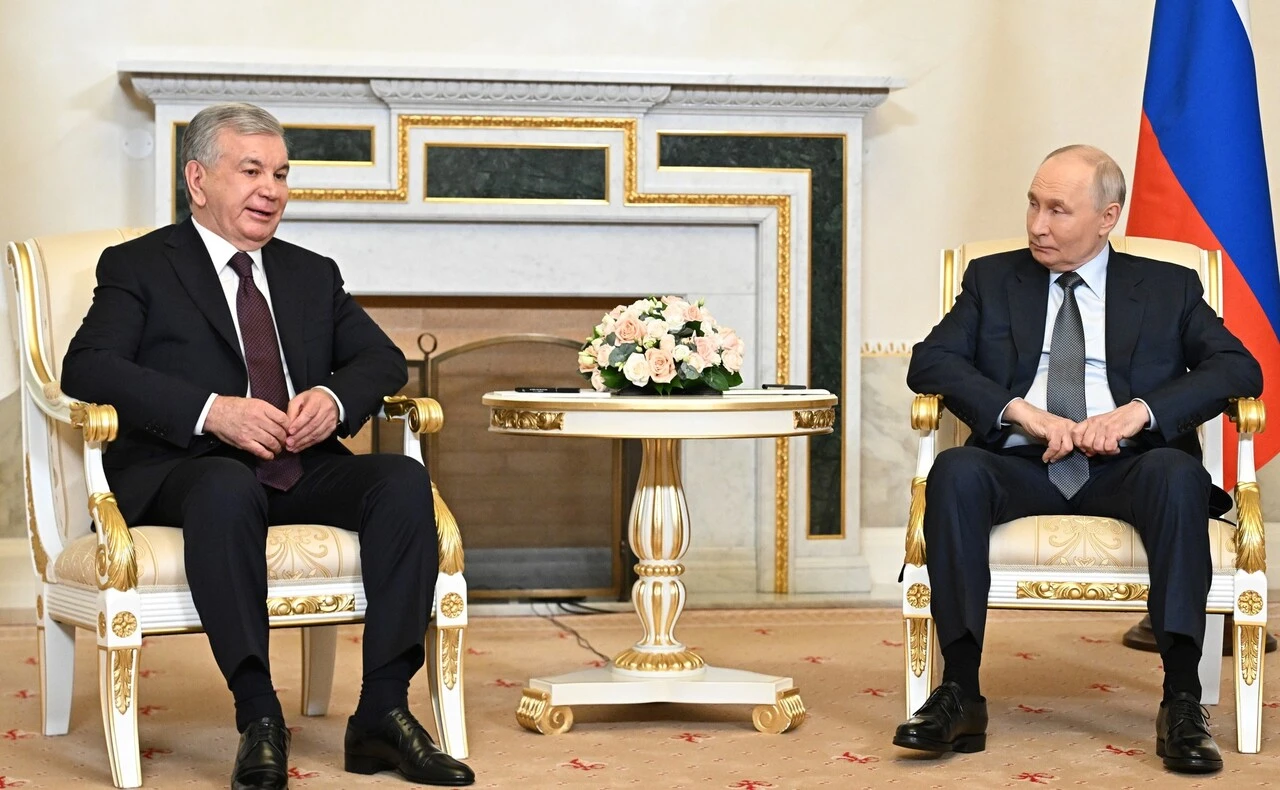
The Kremlin presented the meeting primarily as confirmation of the successful development of Russian-Uzbek relations and a major energy project. Putin highlighted the economic dynamics of bilateral ties, stating that “trade turnover is growing; last year it increased by more than 12 percent.” He also described the planned nuclear power plant as a “large, powerful facility” and noted Mirziyoyev’s personal involvement in preparing the project.
The Uzbek side focused on the practical aspects of cooperation. Its statement noted a 20 percent increase in trade turnover since the beginning of the year and ongoing projects in industry, energy, metallurgy, transport and the chemical sector. It also stressed the importance of maintaining the current pace of economic cooperation and expanding regional contacts.
Unlike the Kremlin, Mirziyoyev’s press service devoted noticeable attention to cultural events. The statement mentioned the premiere of George Frideric Handel’s opera Tamerlano at the Mariinsky Theatre and the opening of an exhibition of Uzbek applied arts at the State Hermitage Museum.
During the meeting itself, Mirziyoyev described SPIEF as a “serious” forum and said the Uzbek delegation was already participating in negotiations and forum sessions. Speaking about bilateral relations, he noted: “Trade turnover is approaching the target we agreed on… today it stands at $13 billion based on the results of 2025.”
The main outcome of the visit was the launch of construction of the integrated nuclear power plant in Uzbekistan’s Jizzakh region. The project includes two large VVER-1000 reactors and two small RITM-200N reactors.
During the ceremony, Putin called the project “a vivid example of the friendship and alliance between our two states” and said the plant would be capable of supplying up to 15 percent of Uzbekistan’s electricity consumption once operational.
Mirziyoyev, in turn, presented the project as part of the country’s long-term modernization strategy. “Today we are launching not just another stage of an infrastructure project, but are participants in a historic event,” he said. According to the Uzbek president, the project lays the foundation for a new sector in the country — modern nuclear energy.
Safety was one of the key themes of Mirziyoyev’s remarks. He stressed that “safety is our absolute and unconditional priority” and said the project would be implemented under the supervision of the International Atomic Energy Agency (IAEA).
Notably, while the Russian side used the ceremony to highlight the scale of Russia’s technological involvement and the role of Rosatom, the Uzbek presidential press service focused on Uzbekistan’s technological development, international safety standards and the project’s importance for the national economy.
Mirziyoyev’s visit became one of the most visible events of this year’s SPIEF, which is taking place against the backdrop of the ongoing war in Ukraine and increasing drone attacks on Russian territory. On the opening day of the forum, authorities reported Ukrainian drone attacks on targets in St. Petersburg and the surrounding Leningrad region.
Against this backdrop, the talks between Putin and Mirziyoyev, as well as the launch of the largest joint energy project between the two countries, provided Moscow with an opportunity to demonstrate that it maintains close ties with one of its key partners in Central Asia. For Tashkent, meanwhile, the visit was primarily linked to advancing a major infrastructure project that Uzbek authorities view as part of the country’s long-term energy and industrial development strategy.
Related articles:
- Mishustin in Tashkent: What Uzbekistan and Russia discussed amid growing trade and the launch of the nuclear power plant project
- Mirziyoyev and Putin press services presented the presidents’ phone call differently
- Mirziyoyev and Putin in the Kremlin emphasize “special” ties amid external pressure
Add Yep.uz to your preferred Google sources
Add Yep.uz to your preferred sources in Google to see the site's articles more often in Top Stories.
