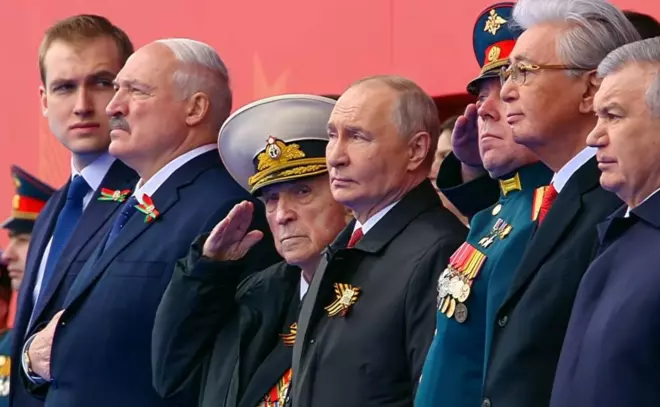
President Shavkat Mirziyoyev took part in events in Moscow on May 9 marking the anniversary of the victory over Nazi Germany. Unlike previous major anniversaries, the number of foreign leaders on Red Square was limited, while the official language used by Moscow and Tashkent once again highlighted differing approaches to the memory of the war.
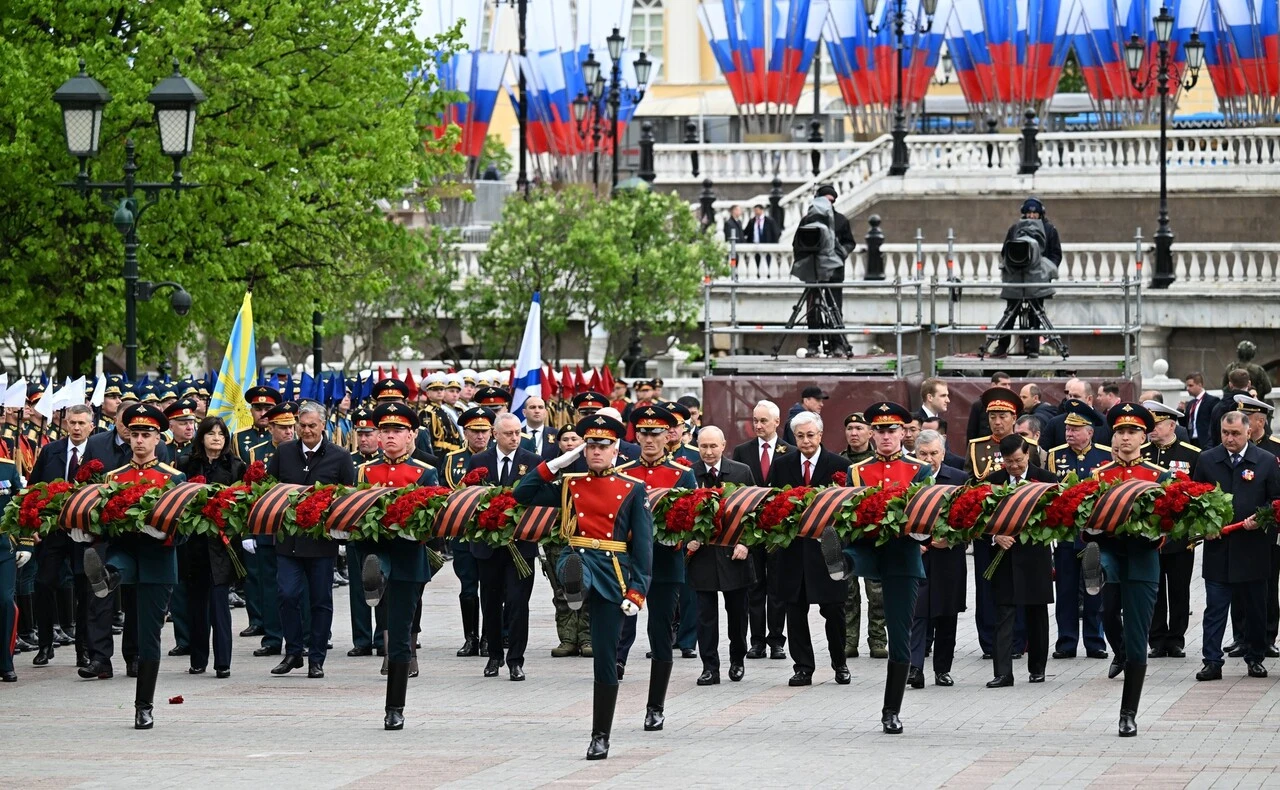
According to statements from Moscow and Tashkent, Mirziyoyev attended the Victory Day military parade on Red Square, participated in a flower-laying ceremony at the Tomb of the Unknown Soldier in Alexander Garden, and attended a ceremonial reception held for Victory Day.
Among CIS leaders, only the presidents of Uzbekistan, Kazakhstan and Belarus attended the parade in Moscow. From outside the post-Soviet space, only the leaders of Laos, Malaysia, Slovakia and Serbia were seen at the events. Against this backdrop, the Kremlin continued to emphasize the international nature of the celebrations despite the significantly narrower list of foreign guests compared with previous major anniversaries.
Particular attention was drawn to the difference in official terminology. On the Kremlin website, the events are consistently described as celebrations marking victory in the “Great Patriotic War,” a term used in Russian state historiography to describe the Soviet-German front of 1941–1945.
At the same time, the press service of the President of Uzbekistan refers to the anniversary of victory in World War II. In Uzbekistan itself, May 9 is officially observed not as Victory Day, but as the Day of Memory and Honors — a date dedicated to those killed in World War II and other armed conflicts, as well as veterans and representatives of the older generation.
The difference in rhetoric reflects a broader approach among Central Asian states toward the Soviet legacy and the memory of the war. In recent years, Tashkent has continued participating in commemorative events linked to the war while avoiding full adoption of Russia’s official historical narrative.

Other related articles:
