
Namazgoh Mosque, together with the Tashkent Islamic Institute of which it is a part, is located on Hazrati Imam (Holy Imam) Square in Tashkent, the capital of Uzbekistan.
History of Namazgoh Mosque
Namazgoh Mosque was built much later than the structures erected in the 16th century, such as the Muyi Muborak Madrasah, Barak-Khan Madrasah, and the Hazrati Imam Mausoleum (the latter was originally built in the 10th century but acquired its present appearance only in the 16th century). Namazgoh Mosque appeared only in the 19th century, shortly before the Russian conquest of Tashkent, and was built for the Kokand rulers who controlled the city during that period.
The Foundation of Namazgoh Mosque by Khudoyar Khan
In the mid-19th century, the Kokand Khanate was ruled by Khudoyar Khan, a ruler from the Uzbek Ming dynasty. He lost and regained power several times during his reign. Tashkent became part of the Kokand Khanate in 1807–1808, before Khudoyar Khan’s rule, but it was he who initiated the construction of Namazgoh Mosque in 1845, immediately after ascending the throne for the first time.

Construction of the mosque continued until 1865, when Tashkent was captured by Russian troops under the command of Lieutenant Colonel Mikhail Chernyayev during the Russo-Kokand War. The mosque was not damaged and continued to serve as a place for Friday and holiday prayers.

Interestingly, after his final overthrow during the Kokand uprising of 1875, Khudoyar Khan fled to Tashkent and sought protection from Russian forces there.
Namazgoh Mosque After 1917
Prayers were held in the mosque until the 1917 Revolution. Afterward, the building was looted and fell into ruin. Restoration took place in the 1970s and is associated with the name of Sheikh Ziyauddinkhan ibn Eshon Babakhan, Chairman of the Spiritual Administration of Muslims of Central Asia and Kazakhstan (SADUM) from 1957 to 1982.
Architecture of Namazgoh Mosque
Today, Namazgoh Mosque faces the inner courtyard of the Tashkent Islamic Institute. The structure is an elongated building consisting of domed galleries and a wooden ayvan (veranda). Its walls are built of fired brick. The main prayer hall contains a mihrab niche decorated with stalactite ornamentation.
Sheikh Ziyauddinkhan ibn Eshon Babakhan
Ziyauddinkhan ibn Eshon Babakhan (also known as Ziyauddinkhan Babakhanov) was the son of another prominent Muslim leader of Central Asia, Eshon Babakhan, who headed SADUM from 1943 to 1957.
Born in Tashkent in 1908, Ziyauddinkhan attended his father’s lectures from an early age and studied the Quran. He was educated at Kukeldash and Barak-Khan madrasahs in Tashkent and also studied under the imam-khatib of the Tillya Sheikh Mosque.
At the beginning of his career, Ziyauddinkhan served as an imam-khatib in Tashkent. For some time he was forced into hiding. In 1941, he and his father were arrested but were soon released. In 1943, he was elected qazi of Uzbekistan, becoming the head of the regional Islamic administration.
As Qazi of Uzbekistan, he was directly subordinate to his father, the Mufti of SADUM, Eshon Babakhan.

In 1948, Ziyauddinkhan was elected Deputy Chairman of SADUM. Following his father’s death in 1957, he became Chairman of SADUM and Mufti of the five Soviet Central Asian republics. Due to declining health, he retired in October 1982 and died in December of the same year at the age of 74. He was buried alongside his father in the Hazrati Imam Mausoleum in Tashkent.
Imam Al-Bukhari Tashkent Islamic Institute
The institute owes its establishment largely to the efforts of Sheikh Ziyauddinkhan ibn Eshon Babakhan, who played a major role in developing Islamic education in the Soviet Union. He succeeded in obtaining permission from Soviet authorities to open a higher Islamic educational institution on the grounds of Namazgoh Mosque in 1971.
The institution was named after Imam al-Bukhari, the renowned Islamic scholar and theologian who lived in the 9th century in what is now Uzbekistan. His teachings greatly influenced the worldview of the young Ziyauddinkhan, who remained devoted to them throughout his life.

The institute was established on the basis of advanced training courses for imam-khatibs that had opened in 1970. During the Soviet era, it was the only higher Islamic educational institution in the USSR, training Muslim clergy for Central Asia, Kazakhstan, the European part of the Soviet Union, the Caucasus, and Siberia.
Almost all muftis in the countries of the Commonwealth of Independent States are graduates of this institution.
Among its students was Akhmad Kadyrov, the future Mufti of the Chechen Republic of Ichkeria, who later sided with the Russian Federation and became the President of the Chechen Republic in 2003. He studied at the institute from 1982 to 1986 and was killed during Victory Day celebrations at a stadium in Grozny on May 9, 2004.

The Institute Today
Since 1991, the institution has officially been known as the Tashkent Islamic Institute. It should not be confused with the Tashkent Islamic University, established under the Cabinet of Ministers of Uzbekistan in 1999.
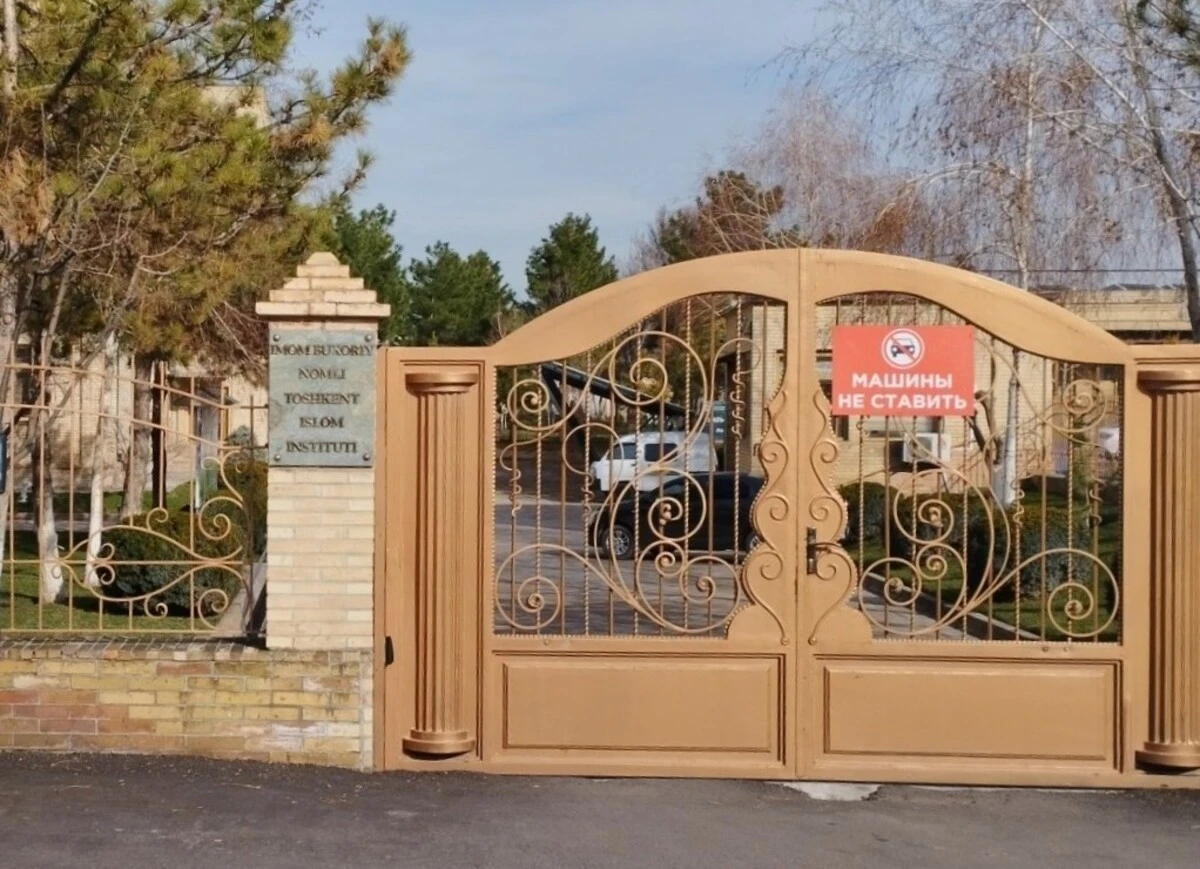
Today, unlike the Islamic University, the institute is subordinate to the Muslim Board of Uzbekistan. Since the early 2000s, its graduates have received bachelor’s degrees.
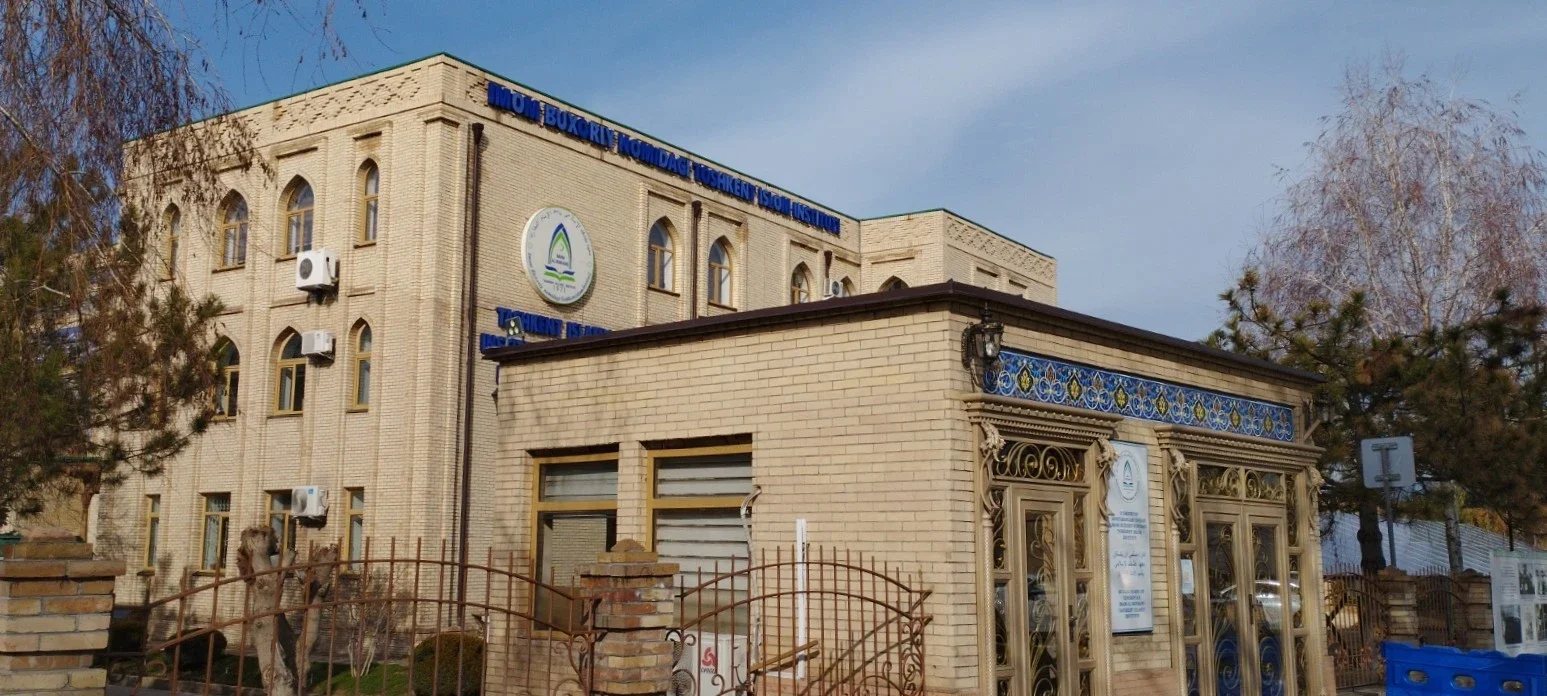
Graduates of the Tashkent Islamic Institute work as imam-khatibs, Islamic scholars, and Arabic language teachers. In addition to religious sciences and Arabic, the curriculum includes the history of religions, the history of Uzbekistan, philosophy, political science, ecology, Uzbek, English, Russian and Persian languages, calligraphy, and public speaking.
Classes are conducted in Arabic and Uzbek.

How to Get There
Namazgoh Mosque and the Tashkent Islamic Institute are located on Hazrati Imam Square in the old part of Tashkent. The square lies between Karasaray Street and the Kalkauz Canal.
You can reach the site by:
- Bus No. 43, 109, or 111 to the Hazrati Imam Mosque stop;
- Bus No. 42 to the Kalkauz Canal stop.
The nearest metro stations are Gafur Gulom, Chorsu, and Tinchlik.
Also read:
