India and Uzbekistan are preparing to expand cooperation in Ayurveda and other traditional systems of medicine through education, research, medicinal herbs and healthcare partnerships following a memorandum signed during Indian Prime Minister Narendra Modi’s visit to Uzbekistan in August.
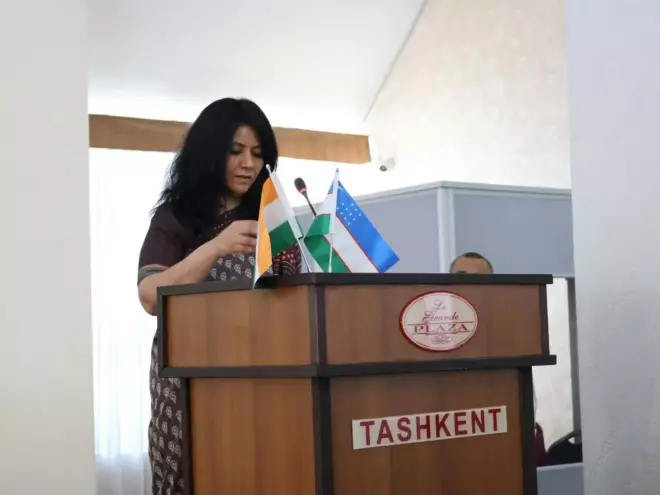
Featured image: Indian Ambassador to Uzbekistan Smita Pant at the 11th Ayurveda Day event in Tashkent. Photo: Embassy of India in Tashkent
The memorandum on cooperation in Ayurveda and other systems of traditional medicine was among a package of bilateral documents signed in Tashkent on August 30 in the presence of President Shavkat Mirziyoyev and Prime Minister Narendra Modi. The two countries also signed a separate agreement on higher education and scientific research.
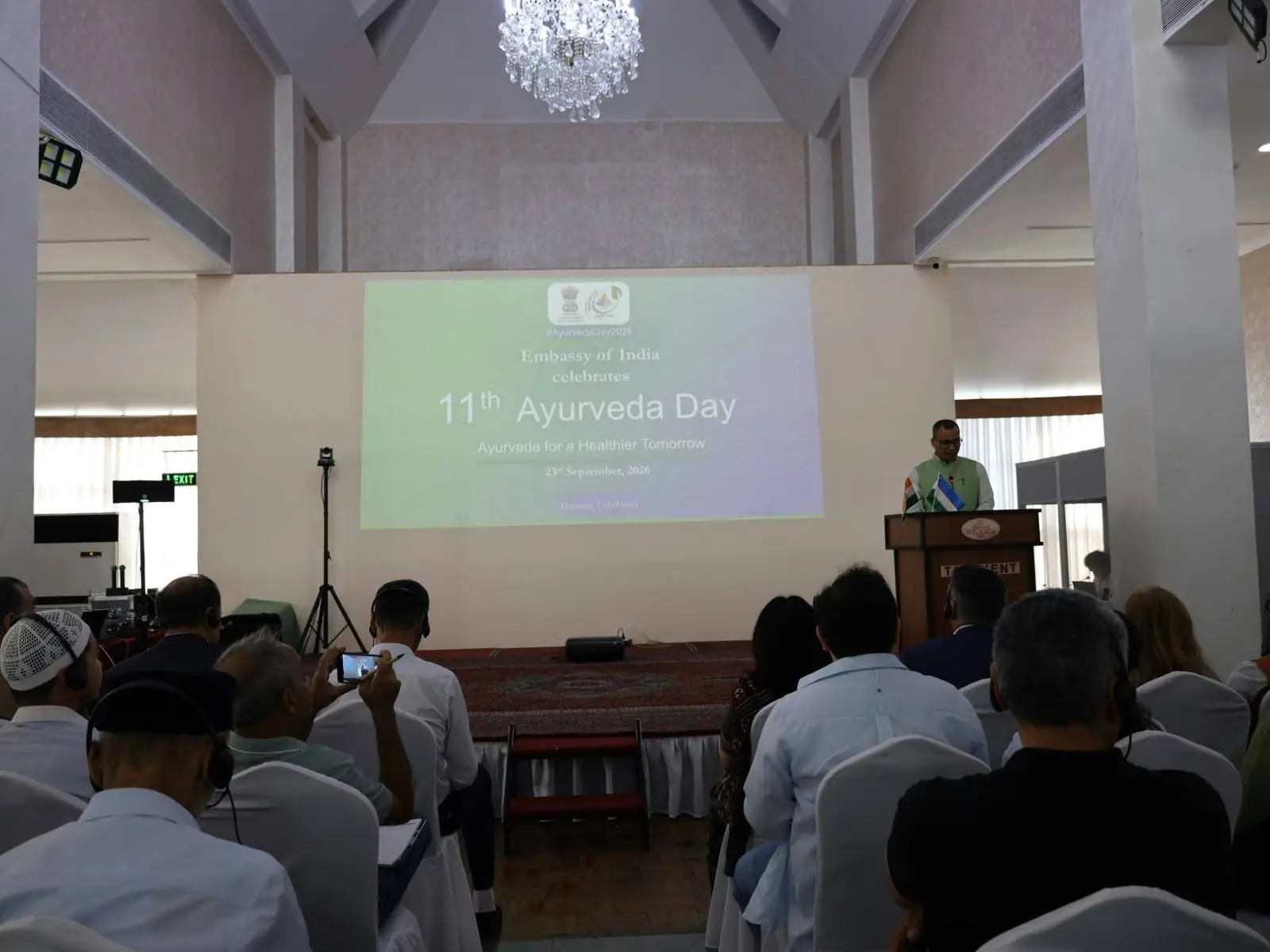
The plans were discussed in Tashkent on September 23 at a Conference on Ayurveda organized by the Embassy of India as part of the 11th Ayurveda Day.
Indian Ambassador to Uzbekistan Smita Pant said the new memorandum provides an “institutional framework” for taking cooperation in Ayurveda and traditional medicine forward.
“There are enormous opportunities for India and Uzbekistan to work together in the spheres of Ayurveda and traditional medicine,” Pant said.
She identified several areas for possible cooperation, including education and capacity building, medicinal plants, wellness and medical tourism, and the development of Ayurvedic medicines and related products.
“Uzbekistan produces several medicinal herbs which can be utilized for producing traditional medicines,” the ambassador said. She added that India could connect its Ayurveda institutions with Uzbek universities and healthcare institutions for education and capacity building.
Pant also pointed to the possibility of developing cooperation in wellness and medical tourism, noting that India has established Ayurveda hospitals, wellness centres, Panchakarma facilities and a network of trained practitioners.
The ambassador said there were also opportunities for Indian companies and Uzbek partners in Ayurvedic medicines, nutraceuticals, herbal cosmetics and related products.
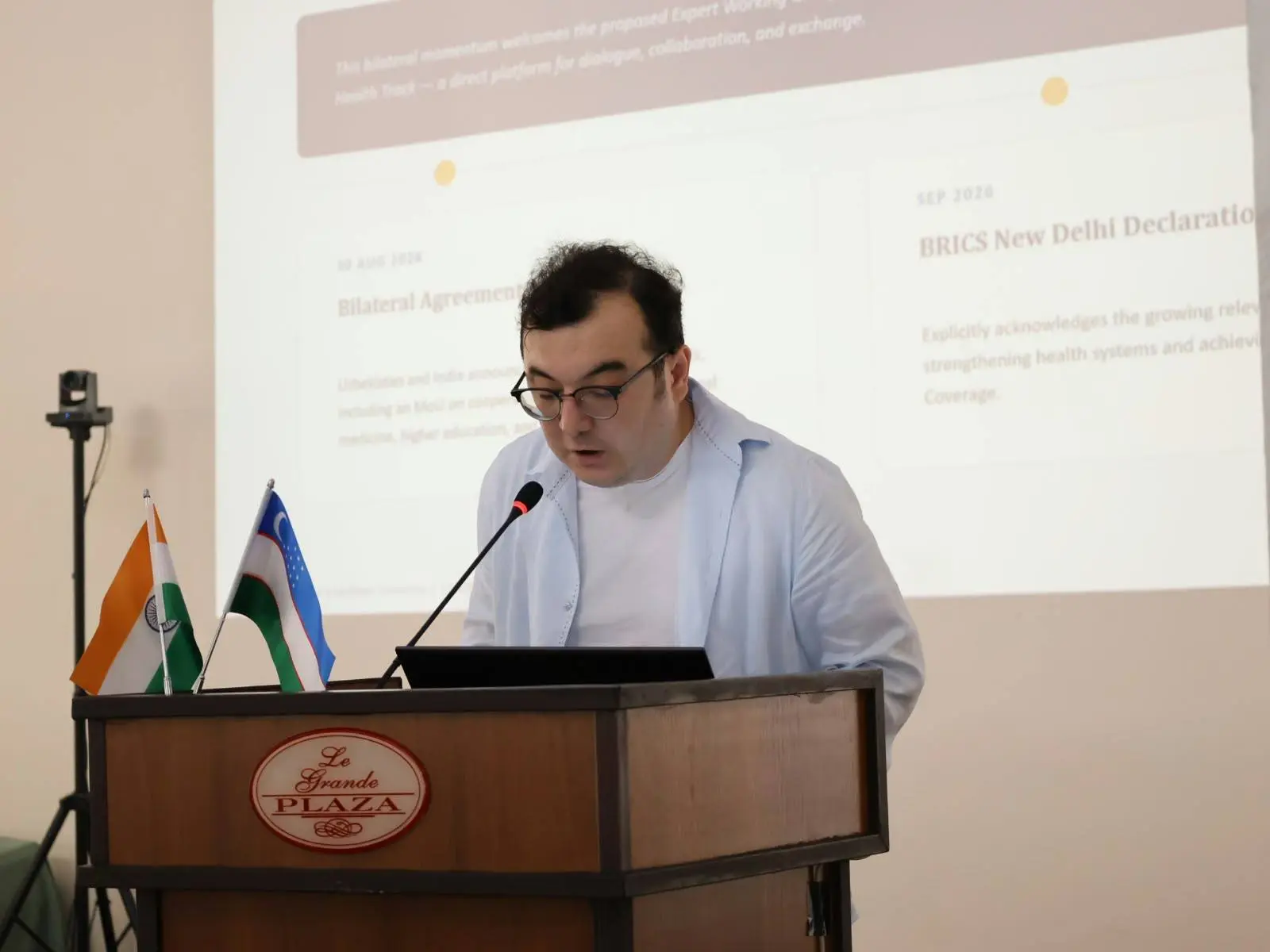
Dr Doniyor Azimov, who spoke at the Ayurveda Day event, focused on the need to move traditional medicine beyond the preservation of historical knowledge toward research, professional education, regulation and measurable health outcomes.
“The future of Ayurveda, the systems of Ayurveda, Yoga and Naturopathy, Unani, Siddha, and Homeopathy, and traditional medicine is not simply a clinical or historical matter—it is a fundamental health-systems issue,” Azimov said.
He proposed cooperation between India and Uzbekistan in academic exchanges, joint research, clinical learning, regulation and safety, medicinal plants, digital health and artificial intelligence, public health and international cooperation.
Among the ideas outlined in his presentation was the creation of an Uzbekistan–India platform for traditional, complementary and integrative medicine cooperation. Azimov described eight potential areas for such cooperation, including joint educational programmes, collaborative research, professional training, pharmacovigilance and quality standards, botanical research, digital technologies and participation in international health initiatives.
His presentation also stressed the need for evidence and patient safety.
“We must not say: ‘It is ancient, therefore it is automatically proven.’ Nor should we say: ‘It is traditional, therefore it has no value.’ The correct approach is: Investigate. Measure. Evaluate,” Azimov said.
The Indian Embassy has also linked Ayurveda cooperation with tourism and wellness. In July, India and Uzbekistan organised an Ayurveda Vegan Food Festival in partnership with Uzbekistan’s Tourism Committee, bringing Indian and Uzbek chefs together to prepare vegan food using local and Indian ingredients, Pant said.
India’s AYUSH sector has also expanded significantly over the past decade, according to figures cited by the ambassador. Pant said the sector’s market grew from $2.85 billion in 2014 to $43.4 billion in 2023, while AYUSH exports increased from $1.09 billion to $2.16 billion over the same period.
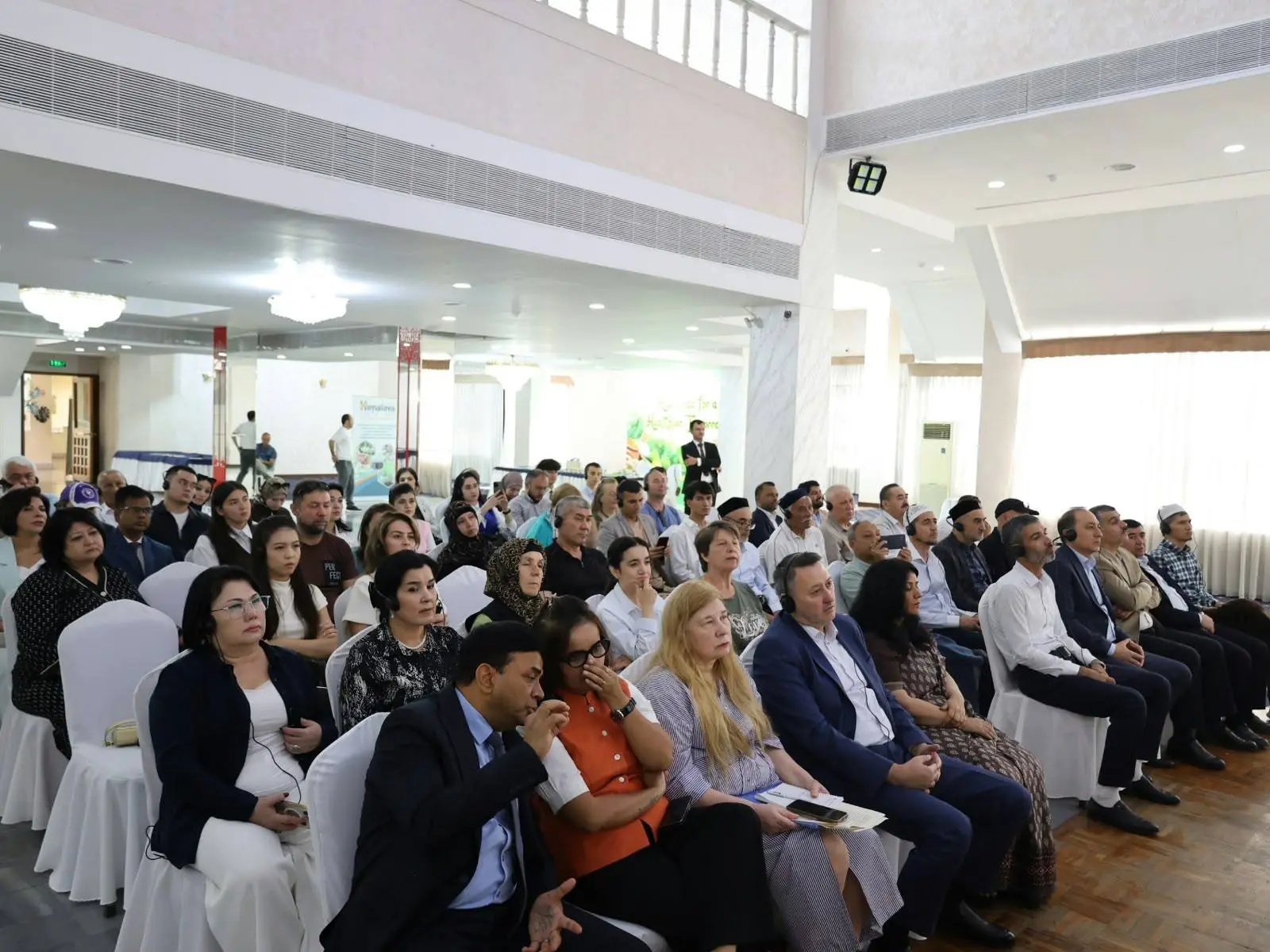
The memorandum signed on August 30 establishes a bilateral framework for Ayurveda, while the September 23 discussions outlined possible areas for putting that cooperation into practice.
Other related articles by Yep.uz:
