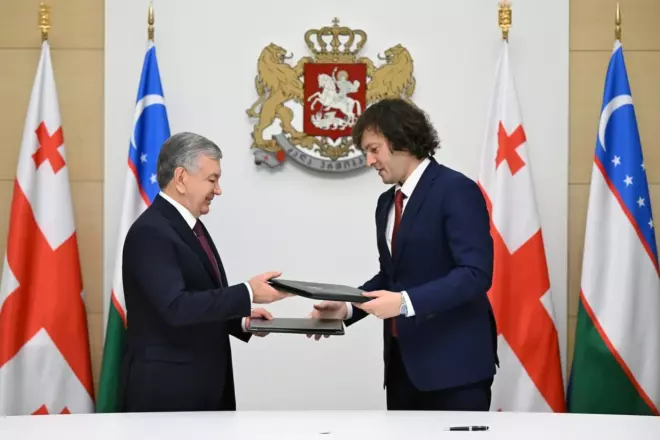
President of Uzbekistan Shavkat Mirziyoyev has concluded a state visit to Georgia, marking the first visit by an Uzbek leader to the country in 23 years. Following talks with Georgian President Mikheil Kavelashvili and Prime Minister Irakli Kobakhidze, the two sides signed a declaration establishing a strategic partnership and a package of bilateral agreements covering the economy, customs cooperation, education, digital technologies, culture and other areas of cooperation.
Late Uzbek President Islam Karimov visited Georgia in 1996 and 2003. For Shavkat Mirziyoyev, this was his first visit to Georgia as president.
Mirziyoyev’s visit took place on July 2–3 and included political talks, the signing of documents, cultural events and official state ceremonies. For Tashkent and Tbilisi, the trip marked an important stage in bilateral relations amid growing interest among Central Asian and South Caucasus countries in developing transport routes and trade links between the regions.
The state visit began on July 2 with Mirziyoyev’s arrival in Tbilisi. At Shota Rustaveli Tbilisi International Airport, he was welcomed by Georgian Vice Prime Minister and Foreign Minister Maka Botchorishvili, along with other officials. The national flags of both countries were raised and an honor guard was assembled in his honor.
Later, an official welcoming ceremony for the Uzbek president was held at the Orbeliani Palace with Georgian President Mikheil Kavelashvili. Following the performance of the national anthems, the two leaders held talks focused on the development of bilateral relations.
According to the Uzbek side, Mirziyoyev emphasized the symbolic significance of the visit, noting that it was taking place for the first time in 23 years. The parties also highlighted increased contacts between the governments, parliaments and business communities of the two countries.
The talks focused on expanding cooperation in trade, investment, transport, energy, digital technologies, agriculture, tourism, and cultural and humanitarian exchanges. Particular attention was given to economic indicators. According to figures presented during the visit, bilateral trade reached $270 million in 2025. Since the beginning of 2026, trade turnover has already exceeded $100 million.
The two sides agreed to prepare a separate roadmap aimed at increasing bilateral trade to $1 billion in the coming years. Plans include efforts to reduce the trade imbalance, expand mutual exports and organize industrial exhibitions in both countries.
Transport and logistics were another major topic of discussion. For landlocked Uzbekistan, the Georgian ports of Poti and Batumi are an important element of international transport routes. During the meetings, the sides discussed expanding the use of these ports for Uzbek cargo shipments.
The parties also supported the idea of creating a logistics hub for Uzbek products in Georgia, including an industrial zone and a permanent exhibition space. The Uzbek side expressed interest in the further development of international transport corridors through the South Caucasus.
Mirziyoyev separately welcomed the operation of the Baku–Tbilisi–Kars railway route. It was proposed to explore the possibility of linking this corridor with the planned China–Kyrgyzstan–Uzbekistan railway, which is regarded as one of the region’s largest infrastructure projects.
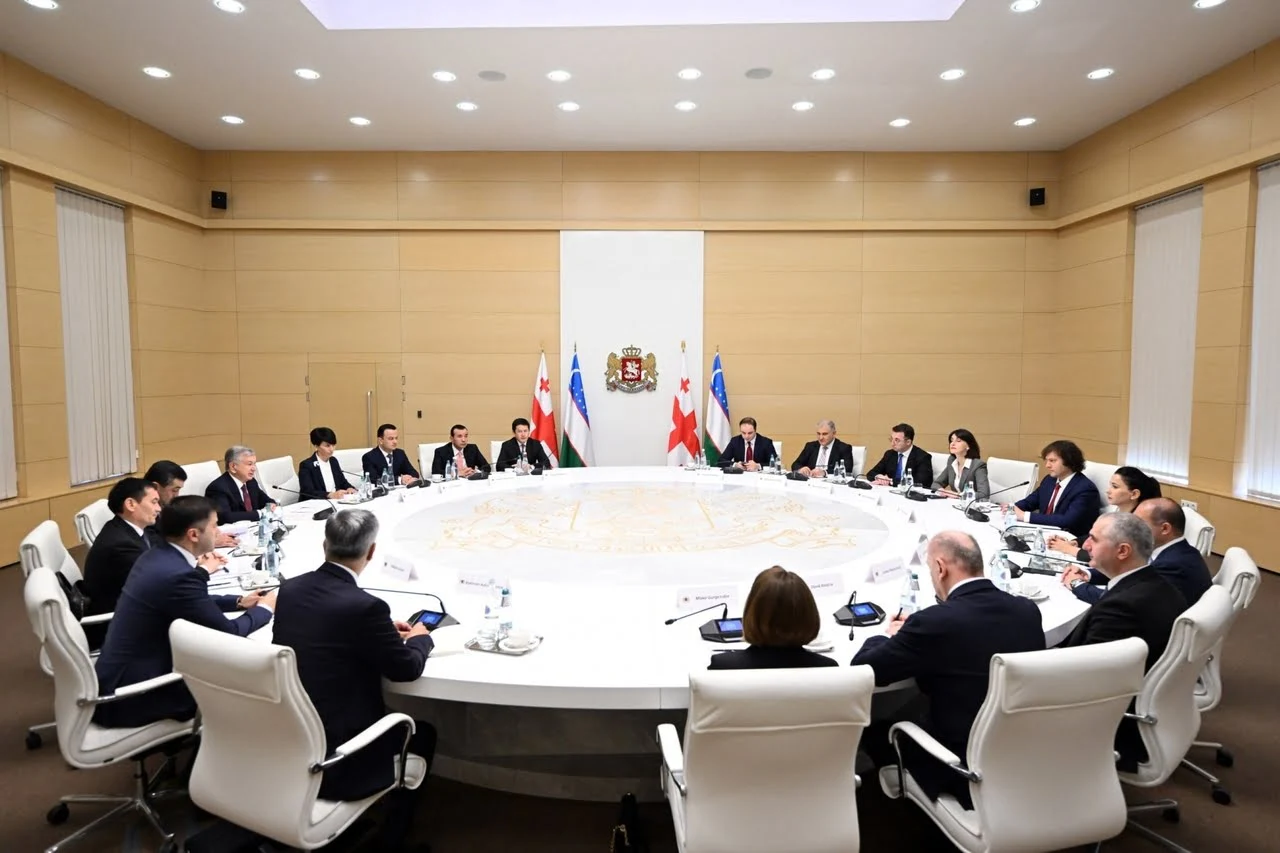
Transport issues also featured prominently during Mirziyoyev’s talks with Georgian Prime Minister Irakli Kobakhidze. According to the Georgian side, the participants discussed prospects for cooperation in logistics and stressed the importance of the Middle Corridor as a reliable and competitive transit route between Asia and Europe.
The main political outcome of the visit was the signing of the declaration establishing a strategic partnership between Uzbekistan and Georgia. The document was signed by Shavkat Mirziyoyev and Irakli Kobakhidze.
The Georgian government said the agreement would create new opportunities for cooperation in political, trade and economic, investment, scientific, technical, cultural and humanitarian fields.
“Georgia highly values its partnership with Uzbekistan, which we regard not only as a reliable and important partner, but also as a friend. Our bilateral relations have developed steadily over many years. The joint declaration on strategic partnership will elevate our relations to a new level,” Prime Minister Irakli Kobakhidze said.
The Uzbek president also described the signing of the document as an important event in the history of bilateral relations.
“Elevating Georgian-Uzbek relations to the level of a strategic partnership is a major achievement,” Mirziyoyev said.
In addition to the declaration itself, the two sides signed a broad package of sectoral agreements and memorandums. These included documents on cooperation in customs affairs, digitalization and information and communication technologies, vocational and higher education, science and innovation, culture, healthcare, agriculture, environmental protection, tourism and labor migration.
Documents were also signed between the financial authorities of the two countries, agreements on implementing the E-Permit electronic permit exchange system and a memorandum of cooperation in radiation protection and nuclear safety.
Another practical outcome of the visit was the announcement of a decision to open an Embassy of Uzbekistan in Georgia.
Cultural events also played a significant role in the visit. On July 3, Mirziyoyev and Kobakhidze attended the unveiling of a monument to Uzbek poet and thinker Alisher Navoi in Tbilisi. The monument was erected in Navoi Park in the Varketili district.
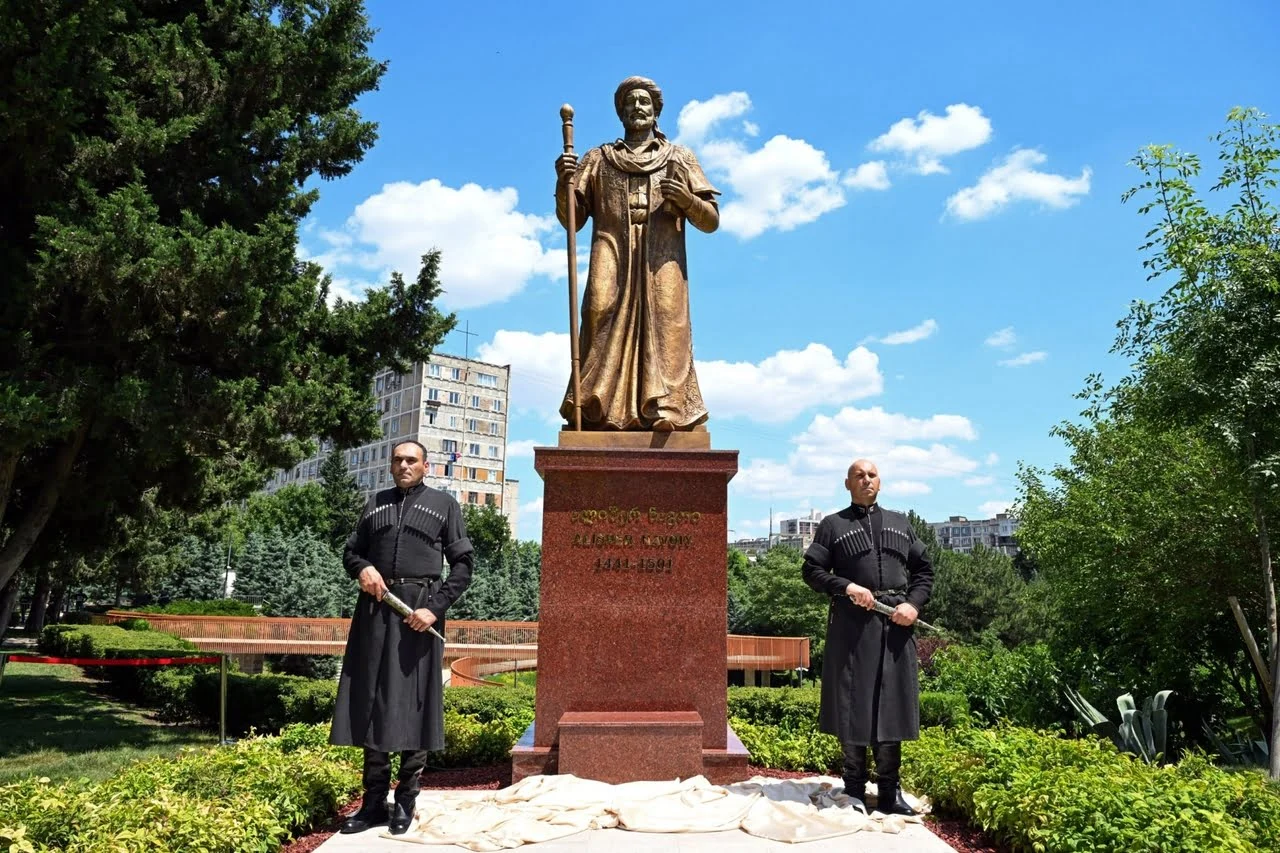
At the ceremony, representatives of both countries emphasized that the monument symbolized strengthening humanitarian ties between their peoples. In Uzbekistan, one of the central streets of Tashkent bears the name of Georgian poet Shota Rustaveli, and a monument to him has also been erected there.
According to the Uzbek side, cultural cooperation between the two countries has intensified significantly in recent years. In March 2026, Georgian Culture Days were held in Tashkent, while Uzbek Culture and Film Days had previously taken place in Tbilisi.
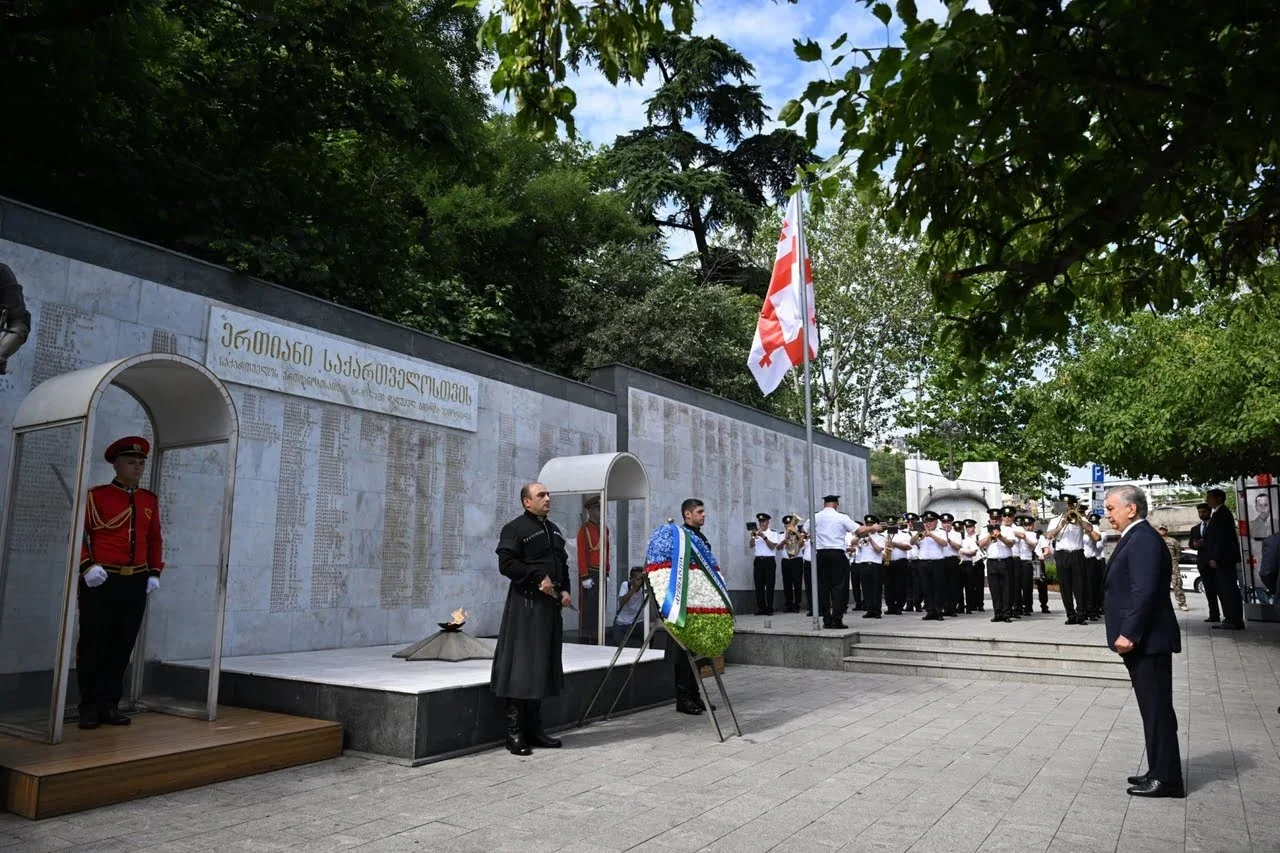
During the visit, Mirziyoyev also visited Heroes Square in Tbilisi, where he laid a wreath at the memorial to those who died for Georgia’s unity. An honor guard took part in the ceremony, while a military orchestra performed the national anthems of the two countries.
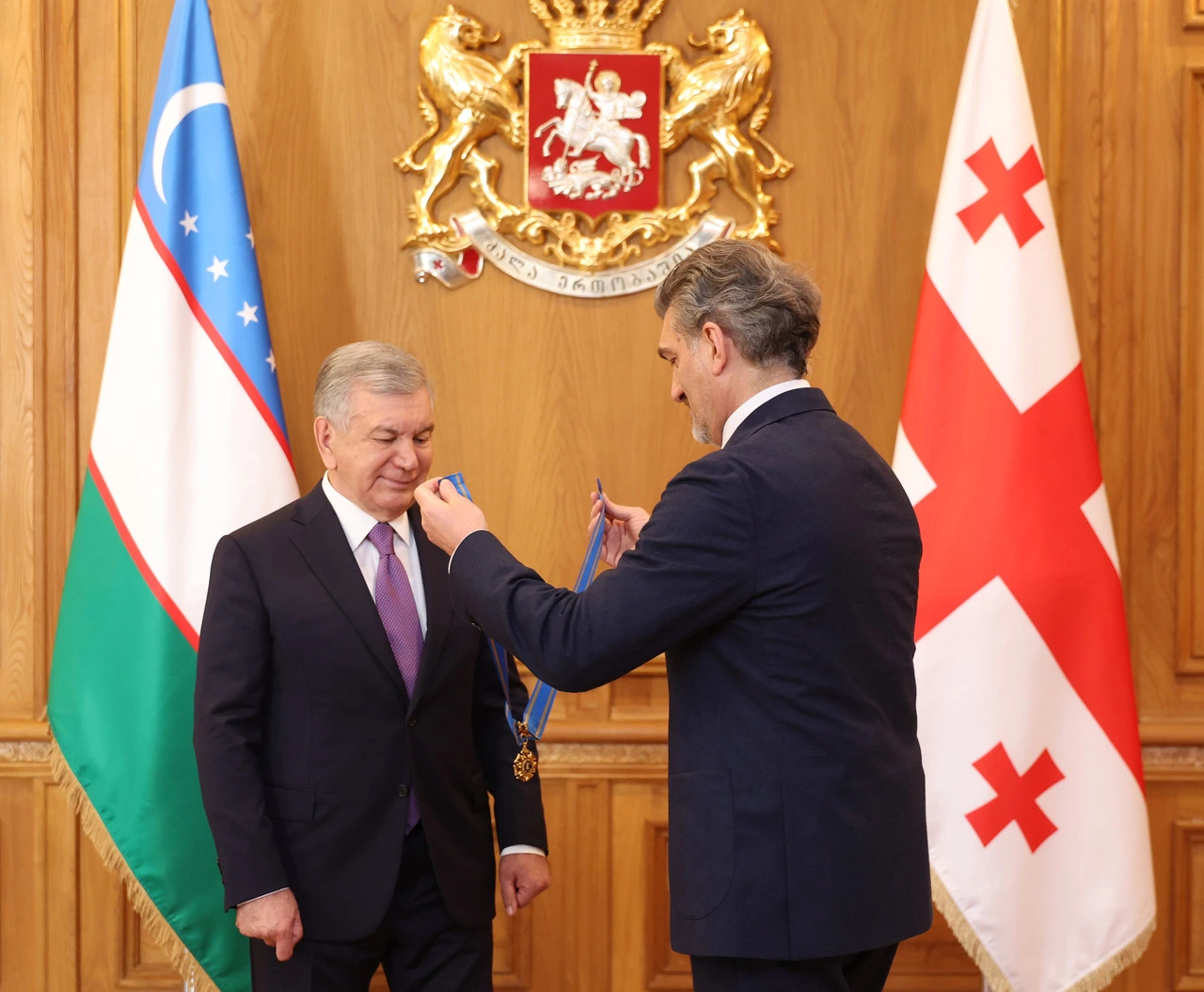
A separate event was the awarding of Georgia’s highest state honor, the Order of the Golden Fleece, to the Uzbek president. The award was presented by Georgian President Mikheil Kavelashvili.
According to the Georgian side, Kavelashvili thanked Mirziyoyev for supporting Georgia’s sovereignty and territorial integrity and noted his contribution to the development of bilateral relations.
At the conclusion of the visit, the parties agreed to prepare a joint roadmap for implementing the agreements reached and to continue work on expanding trade, economic and transport cooperation.
On July 3, the Uzbek president departed Tbilisi. At Shota Rustaveli Tbilisi International Airport, he was seen off by Prime Minister Irakli Kobakhidze and members of the Georgian government.
The signed documents and the newly announced strategic partnership became the main outcomes of the first visit by an Uzbek leader to Georgia in more than two decades and set new directions for relations between the two countries.
